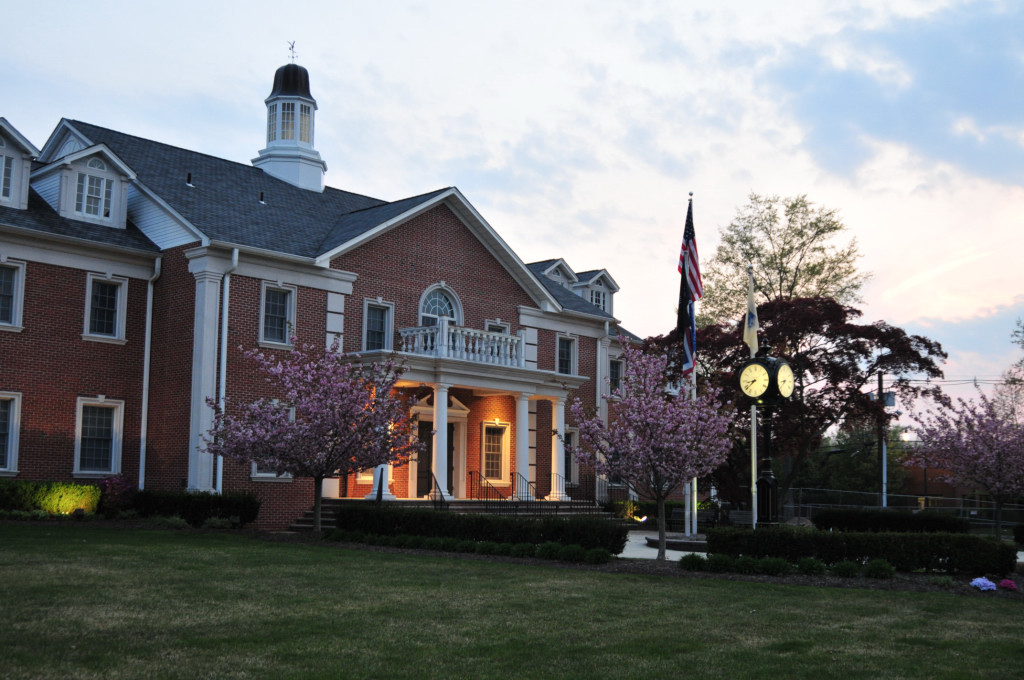
On June 26, 1955, a Pauline Father named Stanley Nowak blessed a small wooden barn on a tract of farmland in Bucks County, Pennsylvania, and celebrated the first Mass before a single icon: a replica of the Czarna Madonna — the Black Madonna of Częstochowa. He could not have foreseen that this converted outbuilding, set on 170 acres atop Beacon Hill, the highest elevation in Bucks County, would grow into the foremost Polish-American Catholic pilgrimage center in the United States, drawing thousands of pilgrims from across the continent every August, and earning the name that now echoes in prayer and song: American Częstochowa.
The shrine stands as a monument to a particular kind of faith — one forged in displacement, tested by history, and sustained by an icon. The Black Madonna of Częstochowa, Poland's most venerated image, had accompanied the Polish people through Tatar invasions, the Partition, Nazi occupation, and Communist suppression. When Poles came to America in the nineteenth and twentieth centuries, they brought their devotion with them. Fr. Michael Zembrzuski, a Pauline Father who obtained permission from Cardinal O'Hara and the Holy See in 1953, bought the land in Bucks County to give that devotion a home. The first recorded pilgrimage arrived the same day as the blessing, departing from St. Laurentius parish in Philadelphia — a parish that, decades later, would donate its own historic stained glass windows to the growing shrine.
📜 History & Spiritual Significance
The Paulini — the Order of Saint Paul the First Hermit — have guarded the original Czestochowa icon at Jasna Góra monastery in Poland since 1382. It was fitting that the same order would establish the American counterpart. The icon at the heart of the devotion depicts the Virgin Mary and the Christ Child in the Byzantine manner, the Madonna's dark face marked by two sword scars on her right cheek — wounds said to have been inflicted by Hussite raiders in 1430, scars that have persisted through successive restorations, whether by design or the resistance of the original medium. Age, candle soot, and the chemistry of the original medium have darkened the panel further, giving rise to the epithet that has defined Polish Marian devotion for six hundred years.
The growth of the American shrine was rapid. In 1960, additional property was acquired, the cemetery was consecrated, and planning began for a permanent church adequate to serve the waves of pilgrims who were already arriving in numbers no barn could hold. Archbishop John Krol of Philadelphia presided over the groundbreaking on Beacon Hill in 1964. Two years later, on October 16, 1966, the new church was solemnly dedicated — with President Lyndon B. Johnson and his family seated in the nave, a moment that announced to the nation that this was not merely an ethnic devotional site but an institution of American Catholic life.
The church was designed by the Polish-American architect George Szeptycki. Its lower chapel was constructed as a deliberate replica of Our Lady's Chapel at Jasna Góra in Częstochowa, Poland, so that Polish-Americans who could not travel to the original shrine would find an echo of it here. Stained glass windows — some rescued from the closed St. Laurentius Church in Philadelphia — blaze with color in the nave above. A 1988 expansion added the Ave Maria Retreat House and Visitor Center.
No figure connects the American shrine to Rome and to Poland more directly than Karol Wojtyła. The future Pope John Paul II visited twice before his election: first in 1969, and again in 1976 as a cardinal, accompanying Polish bishops attending the International Eucharistic Congress in Philadelphia. Four years after his election, in 1980, he blessed and signed a copy of the Czestochowa icon, which now hangs in the lower chapel of the shrine — a tangible thread between Doylestown and the Vatican. In 2008, the shrine received formal "National Shrine" designation from the United States Conference of Catholic Bishops, cementing its standing as one of America's premier Catholic pilgrimage sites.
Presidential visits became a measure of the shrine's reach into American civic life. George H.W. Bush attended a Communion Breakfast here on April 13, 1980, signing the guest book: "With very happy memories of a wonderful day." Ronald Reagan visited in 1984 for the conclusion of the Polish-American Festival. The shrine's cemetery holds monuments to Ignacy Jan Paderewski (prime minister of Poland and renowned pianist, whose heart is preserved in an urn on the grounds), the Polish-Lithuanian hussars, and the victims of the Katyń massacre — the 1940 Soviet execution of some twenty-two thousand Polish officers, police, and intellectuals, a wound in Polish memory that the shrine's memorials refuse to let fade.
The 2005 Golden Jubilee brought four cardinals and bishops from the Vatican, Poland, and the United States. In 2025, the 70th anniversary celebration was attended by Metropolitan Archbishop Nelson Perez and a papal envoy from the Vatican, marking seven decades of continuous Pauline presence on Beacon Hill.
☩ Pilgrimage Sites in Doylestown
National Shrine of Our Lady of Czestochowa
Sanktuarium Matki Bożej Częstochowskiej
The main church rises above its 170-acre wooded estate with a solemn simplicity that gives way, on entering, to the warm glow of Polish stained glass. The upper church houses the focal point of every pilgrimage: a large reproduction of the Czarna Madonna icon, framed in the Polish tradition with votive offerings from the faithful — a tangle of rosaries, medallions, crutches, and handwritten petitions that accumulate year upon year. The lower chapel is a careful replica of Our Lady's Chapel at Jasna Góra, its walls, gilded altar, and arrangement of candles transporting visitors to the original shrine in Częstochowa. Also displayed in the lower chapel is the icon blessed and signed by Pope John Paul II in 1980. Adjacent to the shrine buildings are the outdoor Stations of the Cross, a religious article store, a cafeteria serving Polish food, and the Ave Maria Retreat House.
Polish-American Cemetery
Opened and consecrated in 1960, this cemetery on the shrine grounds has grown into a site of Polish-American historical memory as much as of religious devotion. Among its monuments: a memorial to Ignacy Jan Paderewski, pianist, statesman, and prime minister of Poland, whose heart was brought from New York to rest here; a monument to the Polish-Lithuanian winged hussars; and a memorial to the victims of the Katyń massacre, the Soviet atrocity of 1940 that killed some twenty-two thousand Polish officers, police, and intellectuals and was denied by Soviet authorities for nearly fifty years. The graves of Polish veterans of World War II are also maintained here.
Ave Maria Retreat House
Dedicated in 1988 alongside the Visitor Center, the Ave Maria Retreat House offers the pilgrim what the bustle of festival weekends cannot: silence. The retreat house accommodates group and individual retreats on the shrine's 170 wooded acres, adjoining Peace Valley Park. For those who wish to extend their pilgrimage into a sustained period of prayer and reflection, the retreat house provides a quiet counterpoint to the large outdoor celebrations that define the shrine's August high season.
🕯️ Annual Feast Days & Celebrations
Feast of Our Lady, Queen of Poland — May 3
May 3 falls on the same day as the Polish Constitution Day, a deliberate convergence that has long made it a dual occasion of religious and national identity for Polish-Americans. The feast of Mary, Queen of Poland, is observed with special Masses and prayers. The date connects the shrine's calendar to the political and cultural memory of Poland in a way that distinguishes it from purely liturgical observance.
August Pilgrimage — Second Sunday of August
Each year on the second Sunday of August — a date chosen for its proximity to the Feast of the Assumption on August 15 — thousands of pilgrims converge on the shrine for the conclusion of the annual four-day walking pilgrimage. The walk departs from three starting points: a parish in Great Meadows, New Jersey (the original route, established in 1988); St. Adalbert Church in Philadelphia (added in 2001); and a parish in Trenton, New Jersey. The full route covers nearly 60 miles over four days and three nights, with pilgrims camping in state parks and on farmland. All ages participate, from grandparents to small children. The concluding Sunday Mass, celebrated outdoors on the shrine grounds, regularly draws several thousand participants. For those who cannot walk, the final Mass alone is a destination.
Feast of Our Lady of Czestochowa — August 26
August 26 is the principal feast day of Our Lady of Czestochowa in the Polish liturgical tradition, commemorating the miraculous defense of Jasna Góra against Swedish siege in 1655. At the American shrine, this day is marked with solemn Masses and processions. The day draws some of the largest crowds of the shrine's calendar year.
Polish-American Festival — Labor Day Weekend
The annual Polish-American Festival, held over Labor Day weekend and the following weekend in early September, is the shrine's largest cultural event — a celebration of food, music, dance, and Polish heritage that draws thousands. President Reagan attended the festival's conclusion in 1984.
Feast of Our Lady of the Rosary — October 7
On October 7, the shrine holds an outdoor Rosary candlelight procession that has become one of the most atmospheric events of its calendar. Pilgrims walk the grounds by candlelight as evening falls, reciting the Rosary together in the open air of Bucks County's autumn landscape. The procession draws thousands to an event that combines contemplative prayer with the sensory beauty of candlelight and the cooling darkness of October.
🛏️ Where to Stay
Hampton Inn Doylestown ⭐⭐⭐ — A 78-room property on Route 611 in Warrington, approximately 10 km from the shrine, with indoor pool, fitness center, free breakfast, and free parking. The most convenient full-service hotel for shrine pilgrims. Website ∙ Reserve this hotel
Homewood Suites by Hilton Doylestown ⭐⭐⭐ — Extended-stay suites on Kelly Road in Warrington, approximately 10 km from the shrine, offering fully equipped kitchens in each unit — practical for pilgrims staying multiple days for festival weekend. Free parking and daily breakfast included. Website ∙ Reserve this hotel
The Doylestown Inn (boutique hotel) — A 17-room historic inn listed on the National Register of Historic Places, located at 18 W. State Street in the heart of downtown Doylestown, approximately 8 km from the shrine. The building dates to 1871; notable past guests include Henry Ford, Pearl S. Buck, and James Michener. The on-site Hattery Stove & Still restaurant serves daily. Website
🚗 Getting There
By Air: Philadelphia International Airport (PHL) is the nearest major airport, approximately 50 km (31 miles) south of the shrine. Driving time is approximately 50–60 minutes via PA-611 North. Newark Liberty International Airport (EWR) in New Jersey is approximately 110 km and serves as an alternative for travelers from the northeast.
By Train: SEPTA's Lansdale/Doylestown Line (formerly the R5) runs direct service from Center City Philadelphia's Jefferson Station to Doylestown Station, with trains departing approximately every 30 minutes during peak hours. Journey time is approximately 1 hour 15 minutes. Doylestown Station is approximately 5 km from the shrine; a taxi or rideshare is needed for the final leg. For schedules: septa.org
By Car: From Philadelphia, take US-611 North approximately 40 km (25 miles) directly to the shrine. From New York City, take I-95 South to PA-276 West to US-611 North, approximately 130 km (80 miles), 1.5–2 hours depending on traffic. Free parking is available on the shrine grounds, including bus parking.
By Bus: Local bus service (SEPTA Route 55) passes near the shrine. For those arriving from New York by bus, New Jersey Transit services reach Trenton, from which connections to the SEPTA Doylestown line are possible.
📚 Further Reading
Books:
Our Lady of Czestochowa Foundation. The Glories of Czestochowa and Jasna Gora: Miracles Attributed to Our Lady's Intercession — A collection of healing accounts attributed to the miraculous image of Our Lady of Czestochowa, many never before available in English. Published by Marian Press, 2004.
Online Resources:
National Shrine of Our Lady of Czestochowa — Official Website — Mass schedules, retreat house bookings, walking pilgrimage registration, live streaming, and the full history of the shrine in English and Polish.
Order of Saint Paul the First Hermit — American Czestochowa — Background on the Pauline Fathers, their history at Jasna Góra, and their ministry at the American shrine.
SEPTA Lansdale/Doylestown Line — Current timetables for train service between Philadelphia and Doylestown.
🎥 Recommended Videos
Walking Pilgrimage to American Czestochowa 2022 — A 6-minute documentary capturing pilgrims on the annual four-day, 60-mile walk from New Jersey to the shrine, showing the campsites, prayer, and arrival. The Little Servant Sisters of Cherry Hill, 2022.
🔗 Useful Links
National Shrine of Our Lady of Czestochowa — Official shrine website with Mass schedules, event calendar, retreat bookings, and live-streamed liturgies.
Order of Saint Paul the First Hermit — The Pauline Fathers' overview of the American shrine and their global ministry.
Annual Walking Pilgrimage — Official site for the four-day walking pilgrimage from New Jersey and Philadelphia to the shrine, with registration and route information.
Visit Bucks County — National Shrine — Regional tourism listing with visitor information.
🥾 Pilgrim Routes
Annual Walking Pilgrimage to American Czestochowa — This four-day, 60-mile pilgrimage follows three converging routes from Great Meadows, NJ (the original route, established in 1988); Trenton, NJ; and Philadelphia, PA (added in 2001), all terminating at the shrine on the second Sunday of August. The tradition deliberately mirrors the centuries-old Polish piesza pielgrzymka — the walking pilgrimages to Jasna Góra that draw up to one hundred thousand walkers in Poland each year. Participants camp overnight in state parks and on farmland. Open to pilgrims of all ages and fitness levels; partial participation (one or two days) is welcomed. Registration and route details: walkingpilgrimage.org
🧭 Nearby Pilgrimage Destinations
Philadelphia (39 km) — Home to the National Shrine of St. John Neumann, America's first male saint, and the Shrine of St. Rita of Cascia, Patroness of Impossible Causes.
Emmitsburg (210 km) — The National Shrine of Elizabeth Ann Seton, America's first native-born saint, in the foothills of the Blue Ridge Mountains.
Graymoor (138 km) — The Franciscan Friars of the Atonement at Garrison, New York, pioneers of the Week of Prayer for Christian Unity.
New York City (118 km) — St. Patrick's Cathedral, the Shrine of Blessed Pier Giorgio Frassati, and the National Shrine of the Blessed Mother at the Church of Our Lady of Pompeii.
Washington, D.C. (272 km) — The Basilica of the National Shrine of the Immaculate Conception, the largest Catholic church in North America.
🪶 Closing Reflection
"I am a man of great trust. I learnt to be so here."
— Pope St. John Paul II, Homily at Jasna Góra, Częstochowa, June 4, 1979